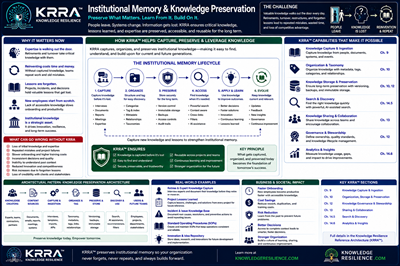
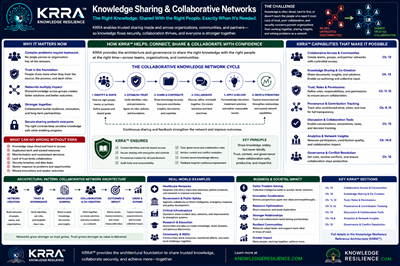
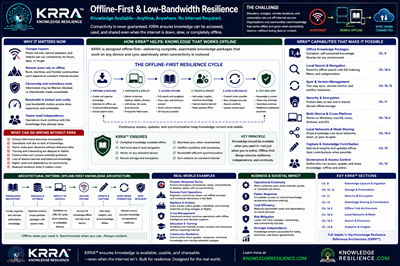
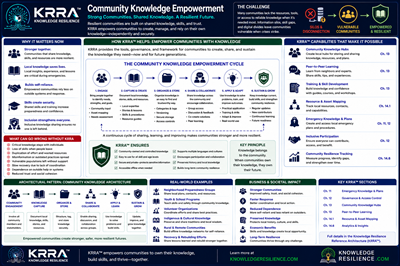
Non-ficton Book Now Available!
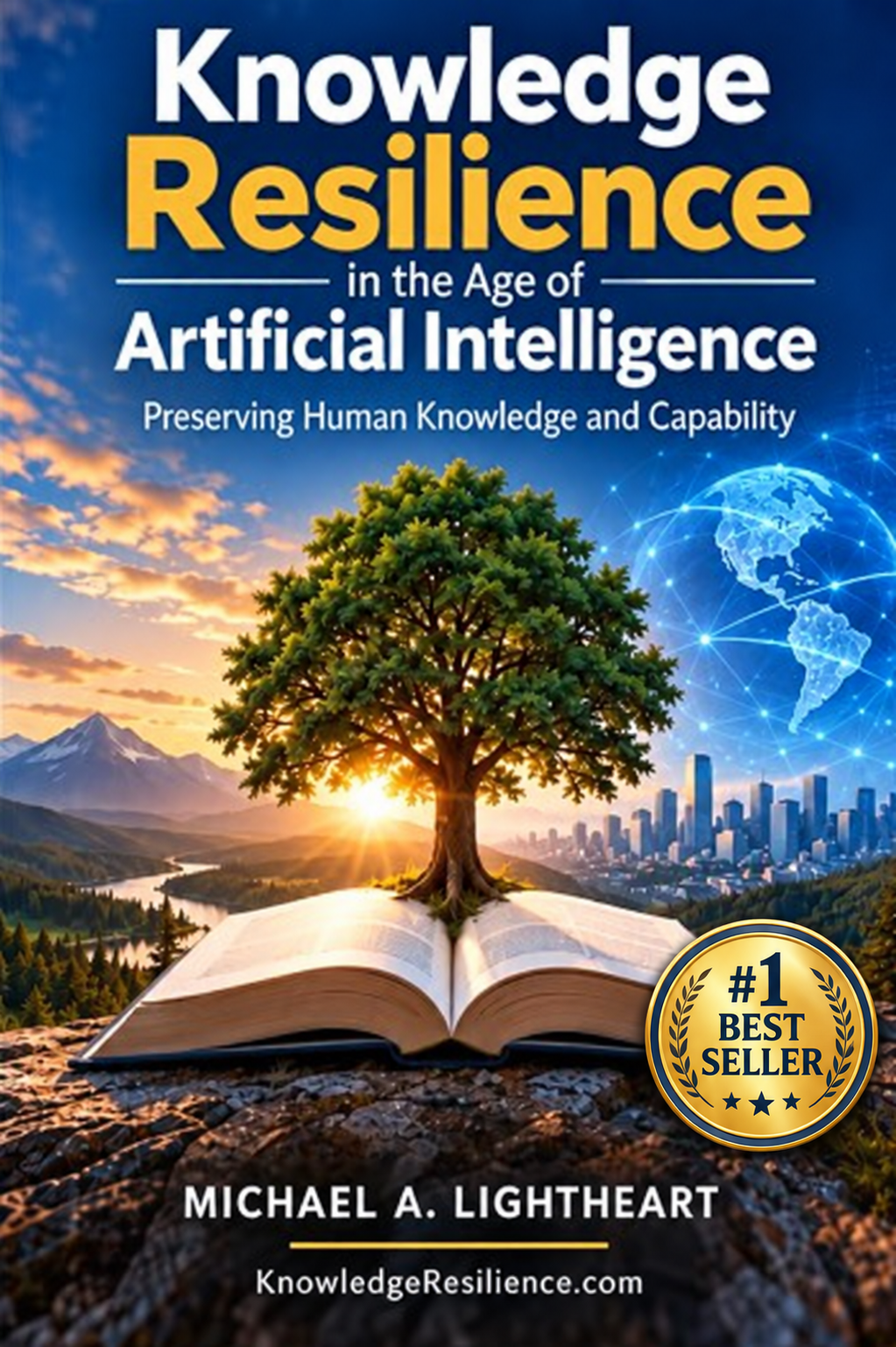
Knowledge Resilience in the Age of Artificial Intelligence
Preserving Human Knowledge and Capability
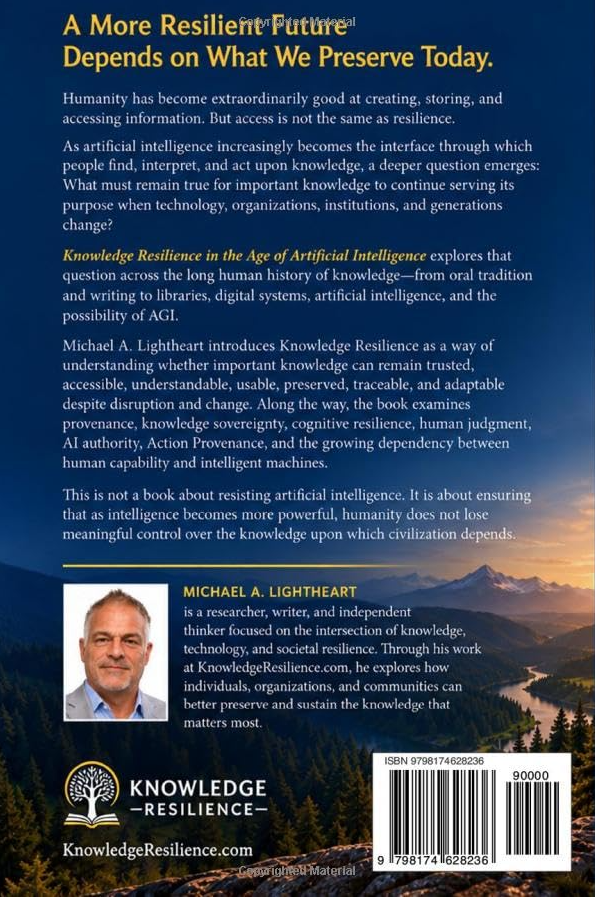
The essential book on how KRRA™ can help organizations preserve trusted knowledge, manage AI risks, and maintain human oversight in an increasingly AI-driven world.
Buy It on Amazon Now
Current Release: KRRA Version 1.0 July 2026
KRRA is an emerging architectural framework. Version 1.0 is being released openly to encourage research, discussion, implementation feedback, and continued development.
Future revisions will incorporate additional research, implementation patterns, and community feedback.
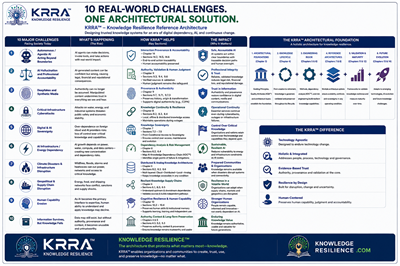
10 Real-World Challenges. One Architectural Solution.
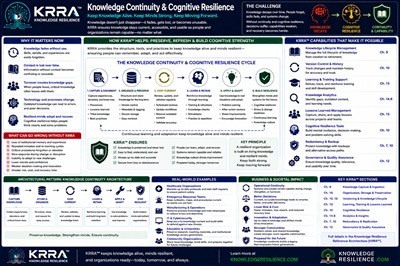
These examples show how the Knowledge Resilience Reference Architecture (KRRA™) can be applied to some of the most important knowledge challenges facing organizations, communities, and society as artificial intelligence, digital dependency, and operational complexity continue to evolve.
Originally inspired by the challenges of preserving practical knowledge, KRRA has evolved into a broader architectural framework applicable to organizations, communities, governments, and technology ecosystems.
The Challenge
Organizations have more information than ever before. Digital platforms, artificial intelligence systems, data ecosystems, and interconnected technologies have transformed how knowledge is created, shared, and applied.
However, increasing dependence on digital platforms, AI systems, and complex technology ecosystems creates new knowledge risks.
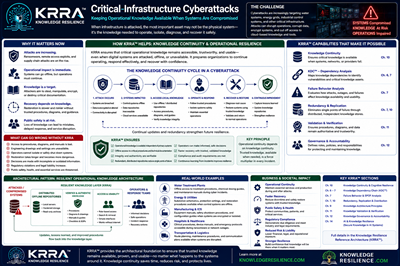
Knowledge may exist and still fail to provide operational value if it cannot be located, trusted, understood, or applied when needed.
The Core Principle
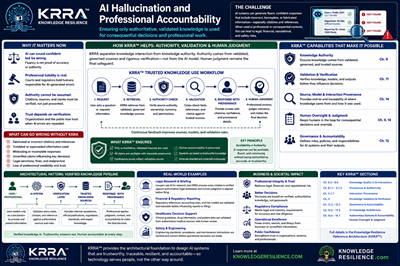
AI is not the knowledge foundation.
AI is the interface to knowledge.
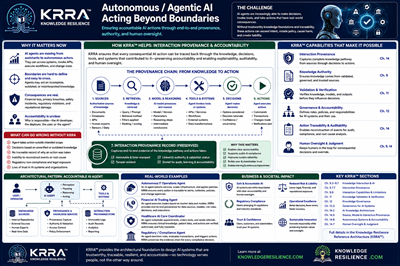
Artificial intelligence enhances discovery, interpretation, and decision support. However, trusted knowledge requires validation, governance, provenance, and traceable lineage.
What KRRA Introduces
Knowledge Architecture
Applying architectural principles to the design, governance, lifecycle management, and improvement of knowledge systems.
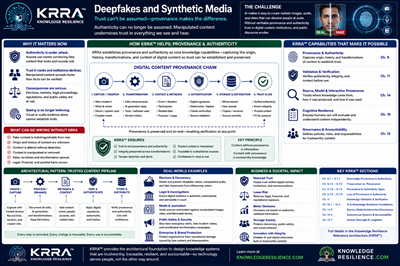
Knowledge Provenance
Understanding where knowledge originates, how it changes, and why it can be trusted.
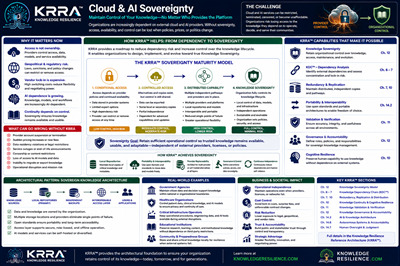
Knowledge Sovereignty
Maintaining awareness and appropriate governance over critical knowledge assets.
Federated Knowledge Networks
Connecting distributed knowledge sources while maintaining trust and governance.
Trusted Knowledge Evolution Loop
Creating controlled feedback processes where knowledge evolves while maintaining authority.
Knowledge Resilience Validation (KRV™)
A methodology for evaluating whether knowledge architectures can continue supporting decisions as conditions change.
About Knowledge Resilience
The Knowledge Resilience Reference Architecture was developed through research into Enterprise Architecture, Data Management, Information Governance, Digital Preservation, Business Continuity, Resilience Engineering, and Artificial Intelligence Governance.
KRRA does not replace these disciplines.
It connects them around a shared architectural objective:
Ensuring trusted knowledge remains available, understandable, and operational across changing technologies, evolving organizations, and future generations.